
Kenakare Trip Advisors
Namibia's iconic landscapes of towering red sand dunes and stark white clay pans, offering surreal beauty and stunning contrasts. Explore the mesmerizing dunes…
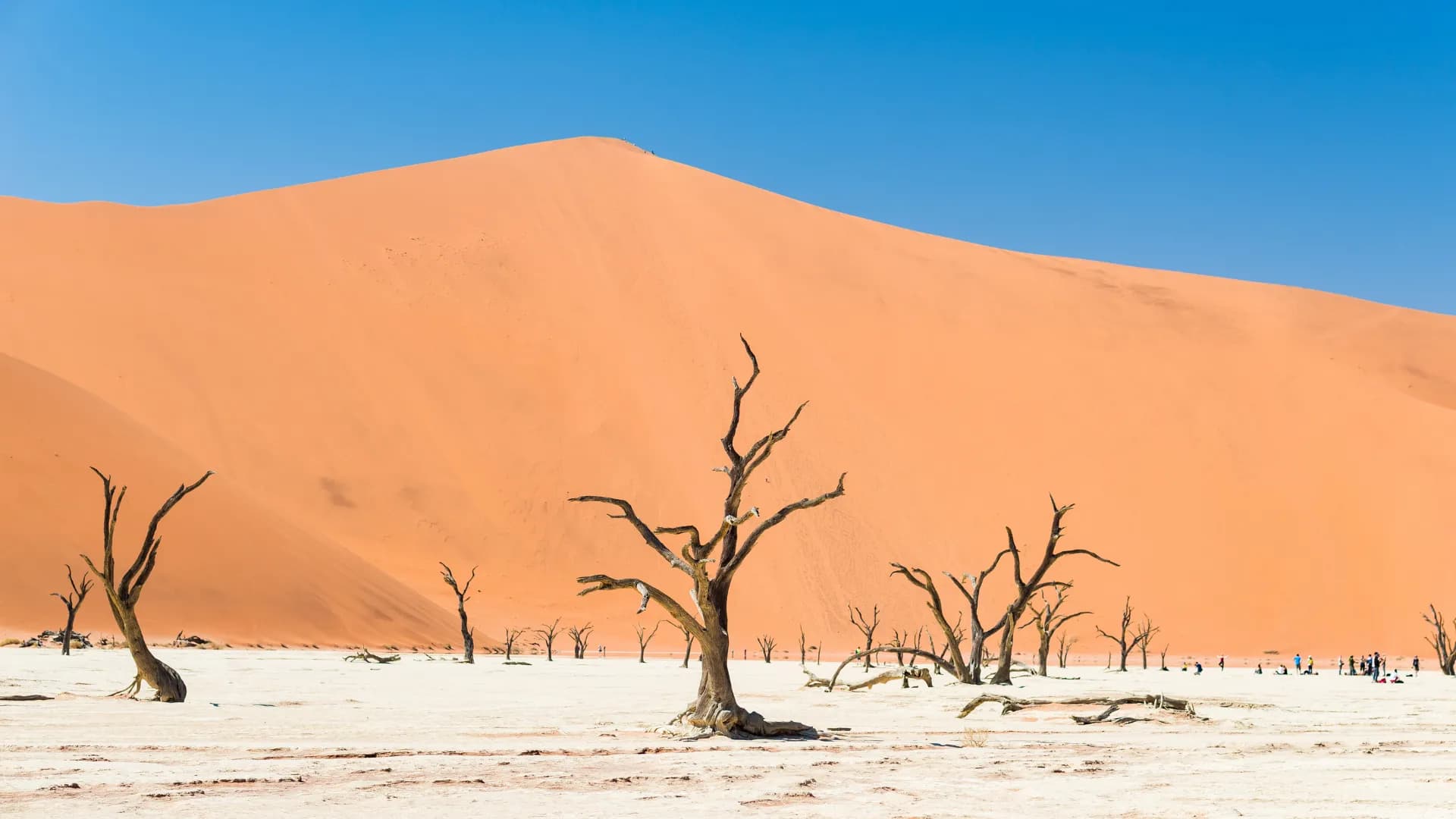
Namibia's iconic landscapes of towering red sand dunes and stark white clay pans, offering surreal beauty and stunning contrasts. Explore the mesmerizing dunes of Sossusvlei, where shifting sands create ever-changing patterns, and marvel at the ghostly trees of Deadvlei, preserved for centuries in the harsh desert environment. These natural wonders in the heart of the Namib Desert are a photographer's paradise and a testament to the raw power and beauty of nature.
The most exclusive and most memorable hour in Namibia — arguably in Africa. A pre-dawn transfer from your lodge to the launch site in the Namib-Naukluft dune sea, where two or three massive balloons are already inflating by torchlight. As the first grey light appears, the balloons lift away from the desert floor in near-complete silence and rise steadily above the dune crests. At full altitude (typically 600–1,000 metres above ground level) the scale of the Namib becomes apparent in a way impossible to grasp from the ground: a sea of star-shaped dunes stretching to every horizon, broken only by the dark line of the Tsauchab River valley and the white smear of the Sossusvlei pan system. The flight lasts approximately 45–60 minutes depending on winds; skilled pilots navigate the changing layers of air to extend the flight where possible and to bring the basket down at precisely the right moment in a clearing between the dunes. After landing, the ground crew has laid out a full champagne breakfast on linen-covered tables in the dune corridor — one of the most improbable and romantic meals available anywhere in the world. Operated by Namib Sky Balloon Safaris. Available year-round; sunrise departure. Weight limit 100 kg. Advance booking essential — this sells out weeks ahead during peak season.
A guided walk into the Sesriem Canyon — a 1 km long, 30-metre deep gorge carved by the Tsauchab River through 15–25 million year old Tsondab Sandstone just 4 km from Sesriem gate. The canyon's name comes from the six (ses) rawhide straps (riem) that early settlers had to join together to lower buckets far enough to reach the water at the bottom — a reminder of how desperately scarce water is in this desert environment, and how life in the Namib has always orbited around finding it. The walk descends into the canyon floor, where the sandstone walls display extraordinary geological layering: ancient river-laid deposits visible as horizontal bands of varying colour, each representing a different climatic period in the Namib's long history. In the deepest section, pools of water persist year-round in shadowed rock hollows — the only permanent surface water for many kilometres and a magnet for birds. Verreaux's eagle, rock kestrel, and various sunbird species are regularly seen in the canyon. The walk is completed with an explanation of the Tsauchab River's role in shaping the Sossusvlei pan system. Approximately 2 km return. Easy gradient, open to all fitness levels.